In financial markets, money doesn’t just follow value—it follows information.
And sometimes, the most powerful question is not what happened, but:
👉 Who knew it before everyone else?
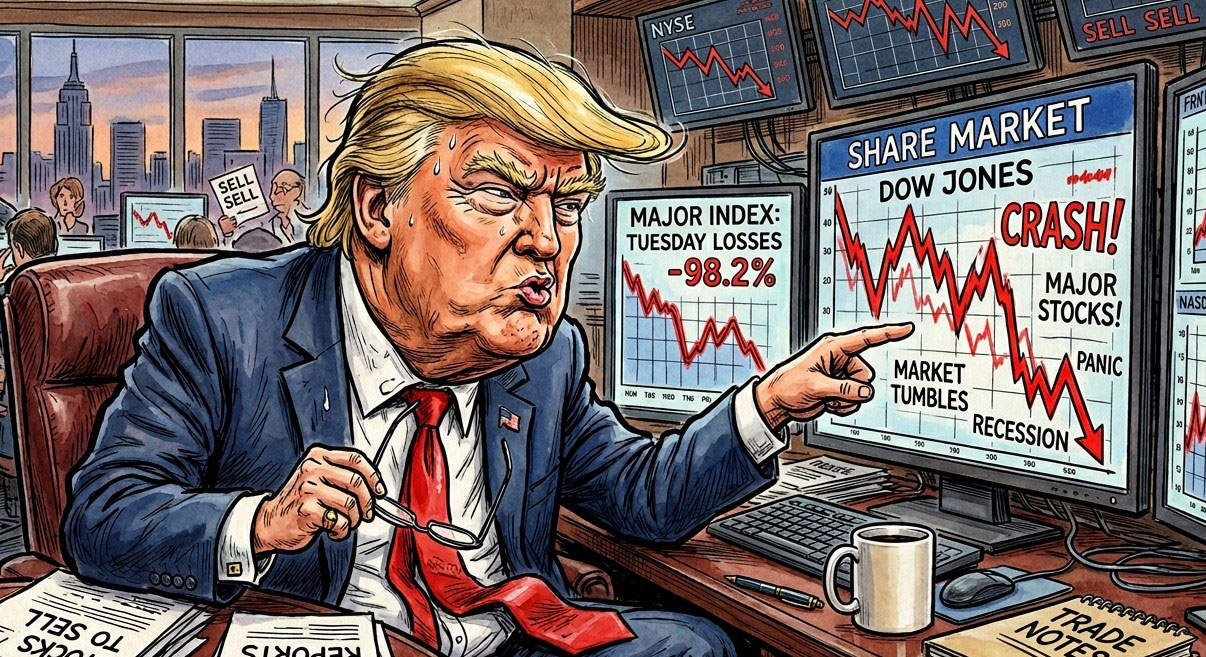
In recent times, the actions and statements of Donald Trump have repeatedly shaken global markets—triggering sharp rallies, sudden crashes, and raising uncomfortable questions about whether power itself can become a trading advantage.
This is not a courtroom verdict. There is no proven insider trading case against Trump. But the patterns, timing, and outcomes have been enough to spark serious debate.
What Is Insider Trading, Really?
At its core, insider trading is about unfair advantage. It happens when someone buys or sells stocks based on material, nonpublic information—information that the general public doesn’t yet have access to.
This could be:
- A company executive knowing about upcoming results
- A government official aware of a policy decision before it’s announced
- Or someone tipped off just minutes before a market-moving statement
While legal trading happens every second, insider trading crosses a line—it breaks trust.
When Statements Move Markets
Modern markets are highly sensitive to political developments. A single policy shift can impact multiple sectors—stocks, commodities, currencies, and more.
Take the recent tariff-related statements by Donald Trump. His fluctuating stance on tariffs created a wave of uncertainty in global markets. At one moment, tariffs were expected to rise; the next moment, signals softened.
Markets reacted immediately:
- Stocks fluctuated sharply
- Investors shifted toward safe assets like gold
- Businesses struggled to predict future costs
Now, this by itself is not insider trading. It’s simply markets reacting to public information. But it creates a fertile ground for suspicion—because when policies keep changing, those with early insights or better interpretation gain an edge.
When he suggested that there had been progress toward ending conflict, markets responded instantly:
The Iran Statement Shockwave
A more striking example came from Trump’s remarks on tensions involving Iran.
- Oil prices dropped sharply
- Stock markets rallied
- Investor sentiment turned optimistic within minutes
But here’s where things get interesting.
Reports later highlighted unusually large trades in oil markets just minutes before the statement was made public. That timing raised eyebrows. While not proof of insider trading, it triggered a critical question:
Did someone know in advance?
This is exactly the kind of scenario regulators watch closely.
The Thin Line Between Influence and Information
Not every market-moving event is illegal. Political leaders are allowed to speak. Policies evolve. Markets react.
But the line becomes blurry when:
- Statements are inconsistent or sudden
- Market reactions are extreme
- Large trades happen just before announcements
In such cases, even the perception of insider advantage can damage trust.
Because markets don’t just depend on information—they depend on fair access to information.
What This Means for Everyday Investors
For regular traders and investors, these events carry an important lesson:
- Don’t chase sudden market moves driven by headlines
- Be cautious during geopolitical uncertainty
- Understand that volatility often benefits insiders more than retail traders
If you’re investing based on news that just broke, chances are—someone else already acted on it.
The Bigger Picture
Insider trading is not just a legal violation—it’s a threat to the integrity of financial markets.
When a few players consistently win because they are better informed (or informed earlier), confidence erodes. And without trust, markets cannot function efficiently.
In a world where a single tweet or statement can move billions, transparency matters more than ever.
Because in the end, the real question isn’t just what moved the market— it’s who knew it before everyone else.